Arizona State University
Building-Aware Mobile Platform
HOME
ROLETechnical Lead / iOS Lead Developer / Backend Engineer / UX + Systems Design
DATESummer 2016 launch
PLATFORMSiOS + Android + Microsoft Server Backend
STACKSwift (iOS), Android (partner dev), ASP.NET/C#, IIS, Microsoft SQL Server, OAuth/WebAuth integration, Bluetooth LE iBeacons
Executive Summary
In conjunction with the opening of the Beus Center for Law and Society at Arizona State University, Unified Field was tasked with building a next-generation mobile application that connected students, staff, and visitors to both the law school community and the building itself.
The result was a feature-rich iOS and Android app backed by a custom Microsoft server platform, designed to support wayfinding, location-aware features, campus communications, events, and a full user directory. The system used Bluetooth LE beacons throughout the building to enable indoor positioning and context-driven interactions, allowing the app to behave differently depending on where users were located.
I served as the technical lead and primary engineer for the project—designing the architecture, developing the iOS application, and implementing the majority of the backend system.
The result was a feature-rich iOS and Android app backed by a custom Microsoft server platform, designed to support wayfinding, location-aware features, campus communications, events, and a full user directory. The system used Bluetooth LE beacons throughout the building to enable indoor positioning and context-driven interactions, allowing the app to behave differently depending on where users were located.
I served as the technical lead and primary engineer for the project—designing the architecture, developing the iOS application, and implementing the majority of the backend system.
Project Goals
The application needed to function as more than a typical campus guide. The goal was to make the building feel “interactive” and socially connected, supporting both daily student life and major events.
Key objectives included:
Key objectives included:
- Indoor wayfinding and navigation across multiple floors
- A real-time sense of “who is here” (opt-in presence tracking)
- Integration with ASU authentication systems
- A full directory and social contact system
- Campus news + event feeds with personalization
- Group and event creation tools for student collaboration
- Beacon-triggered content and screen interactions
- A backend robust enough to support hundreds of concurrent users
System Architecture Overview
The platform consisted of three major components:
I developed the iOS application in Swift and collaborated with another developer responsible for Android.
This infrastructure powered multiple core features, including:
1. Mobile Applications (iOS + Android)
The iOS and Android apps served as the primary user-facing experience. They provided access to maps, directions, directory tools, event listings, group features, and notifications.
I developed the iOS application in Swift and collaborated with another developer responsible for Android.
2. Microsoft Backend Server (IIS + SQL Server)
A centralized backend powered all app features including:
- user identity + permissions (ASURite + role-based access control)
- data persistence (Microsoft SQL Server)
- directory, profile, and contact management
- event system with RSVP workflows and attendance tracking
- group system with membership, roles, and permissions
- private discussion forums tied to events and groups
- notifications (general + personal + system-driven)
- beacon-based location reporting and presence inference
- map routing and indoor navigation logic
- room availability querying and scheduling integration
3. Building Infrastructure (Bluetooth LE Beacons + Digital Displays)
Bluetooth LE beacons were deployed throughout the building (hallways, elevators, rooms, and near digital displays). The mobile app continuously scanned beacon signals to estimate user location and provide a building-aware experience.
This infrastructure powered multiple core features, including:
- automatic floor/area detection for maps and assisted wayfinding
- opt-in user presence tracking (“Who’s Here”) for locating contacts and group members
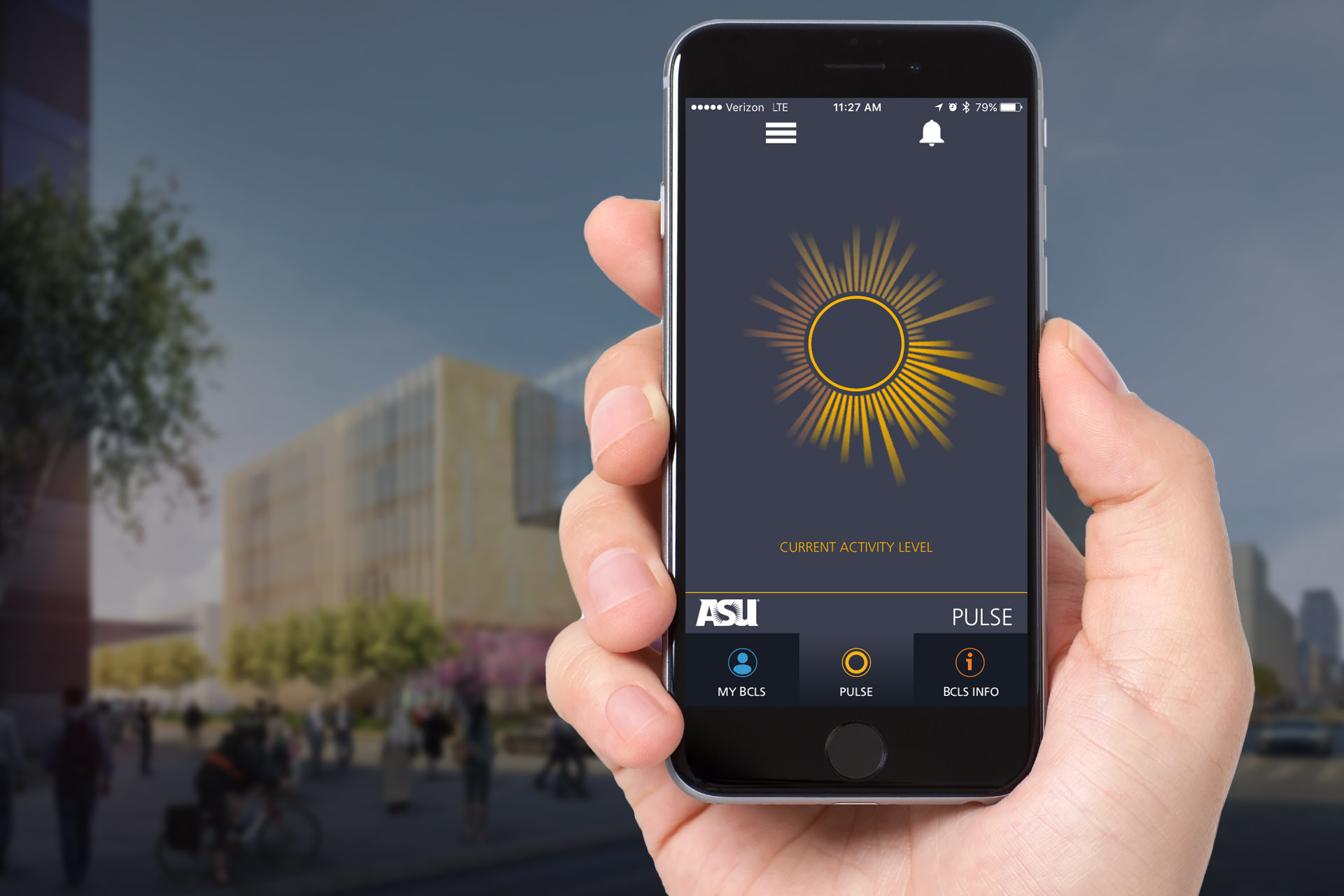
- building activity visualization (“Pulse”) based on live visitor presence in the building
- location-based content and contextual building information
- screen proximity detection to unlock screen interaction features
- room booking and availability visualization tied to building maps
- proximity-based ranking of available rooms based on user location (beacon-derived)
Key Engineering Challenges Solved
1. ASU Authentication + Role-Aware Permissions
One of the major technical constraints was integrating with ASU’s authentication ecosystem. ASU Law students and staff could log in through ASU WebAuth (ASURite), which returned an ASU identity that could be used to attach privileges and profile data.
The platform supported multiple identity types:
- ASU authenticated users (students/faculty/staff)
- non-ASU guests and visitors
2. Indoor Position Awareness Using Bluetooth LE Beacons
Bluetooth LE beacon deployment was still emerging at the time, and indoor RSSI signals were inconsistent due to walls, floor separation, and signal reflections.
Rather than relying on a single “closest beacon” reading, we built a location inference layer that continuously evaluated multiple beacon signals, smoothed RSSI values over time, and applied threshold-based confirmation logic before changing a user’s detected location.
To prevent rapid oscillation between adjacent areas, the system used weighted averaging, motion-aware switching sensitivity (accelerometer-based), and timeout fallback behavior when signals became unreliable.
This enabled stable building awareness features such as:
- floor/area detection for wayfinding
- opt-in “Who’s Here” presence mapping
- location-driven Pulse visualizations
- proximity-based screen interaction triggers near digital displays
3. Custom Indoor Wayfinding + Directions Engine
The app included a full wayfinding system that provided step-by-step directions between locations in the building.
To support this, I designed a custom map routing system where:
- navigation nodes were defined across all floors
- nodes were connected as walkable paths
- routing logic computed optimal paths
- special transitions (stairs vs elevator) could be handled differently
This enabled real indoor navigation without requiring external mapping platforms.
4. Real-Time “Who’s Here” Visibility (Opt-In)
A core experience feature was the ability for users to see who else was currently in the building, including room-level and building-level visibility.
This required:
- continuous beacon listening
- server-side location reporting
- privacy controls and visibility settings
- UI flows that made location sharing explicit and optional
5. Event + Group Communication Layer (Private Forums)
A key extension of the event and group systems was the addition of private, context-aware discussion forums.
These enabled:
- event-based chat rooms for RSVP’d attendees
- group-only discussion spaces for organizations (e.g., “Corp Law”)
- restricted access based on membership and authentication state
Access control was enforced at the backend to ensure only authorized users could view or participate in each forum.
6. Notifications + News Aggregation System
The backend supported a full notification system divided into:
- general campus/building announcements
- personal notifications (invitations, group requests, etc.)
7. Scalable Server Performance for High Concurrent Usage
This was one of my first systems designed to potentially serve hundreds (or thousands) of users at once.
Performance mattered. I focused heavily on:
- query optimization
- server-side validation workflows
- stored procedures where needed
- reducing unnecessary app polling
- ensuring the backend could respond quickly under load
Major Features Delivered
The final application delivered a full campus platform including:
Core User Experience
- indoor maps + floor switching
- step-by-step directions between rooms
- ASU directory with profiles and search
- contact starring and personal notes
- groups system (public/private, invitations, membership requests)
- event listings + RSVP workflows
- topic-based RSS news subscriptions
- push notifications (personal + system announcements)
Social + Communication Layer
- event-based private discussion forums for RSVP’d attendees
- group-based chat spaces with membership-restricted access
- in-app communication tied to events, groups, and attendance state
Location-Aware Systems (Beacon-Driven)
- beacon-driven proximity detection and location awareness
- opt-in live building presence (“Who’s Here”)
- real-time room availability browsing tied to indoor maps
- proximity-ranked room suggestions based on beacon-derived location
External Integrations
- room availability visualization across building map system
- EMS integration for room booking via authenticated web view
- ASURite-based login flow for external scheduling system access
Feature milestone walkthrough (client-facing)
Outcome
The ASU Law building app launched in sync with the opening of the Beus Center for Law and Society and successfully delivered a modern, interactive experience for students and staff.
It represented one of my earliest large-scale multi-platform projects, combining:
It represented one of my earliest large-scale multi-platform projects, combining:
- native mobile development (Swift)
- enterprise Microsoft backend development
- real-world beacon deployment
- location-aware UX design
- scalable system architecture under real usage constraints
Skills Demonstrated
- technical leadership across a multi-platform product
- iOS development in Swift (production deployment)
- backend development in ASP.NET / C#
- Microsoft SQL Server schema + performance optimization
- OAuth / WebAuth identity integration
- Bluetooth LE beacon prototyping and deployment
- indoor navigation + routing algorithm implementation
- location-aware UX design
- push notifications + CMS-driven publishing
- building-scale systems thinking (hardware + software integration)